

Mastering Case Changes and Collaboration in Microsoft Excel
Microsoft Excel is a cornerstone of modern productivity, handling everything from simple spreadsheets to complex financial models. Knowing how to efficiently navigate its features is crucial. This comprehensive guide will delve into the various methods for changing case in Excel, addressing common user queries about case conversion, and explaining how to manage collaborative editing and track changes effectively. We'll cover everything from simple case changes to advanced techniques for managing multiple users and tracking their contributions. Understanding these tools empowers users to work more efficiently and collaboratively, producing cleaner, more professional results. This article explores the nuances of Excel’s case-changing capabilities and provides solutions for common collaboration challenges.
Table
Changing Case in Excel: A Comprehensive Guide
One of the most frequent questions concerning Excel data manipulation centers around case conversion. Whether you need to standardize text for reports, ensure data consistency, or simply improve readability, knowing how to change case in Excel is vital. Several methods exist, each offering different levels of control and flexibility. The simplest approach involves using the Change Case option within the Home tab. This readily accessible function allows users to quickly convert selected text to uppercase, lowercase, title case, or sentence case. For more complex scenarios, where you might need to apply conditional formatting or use formulas for larger datasets, other methods will be required.
Using the Built-In Change Case Feature
The most straightforward approach for how do i change case in excel is to leverage Excel's built-in Change Case functionality. This tool is located within the Home tab, under the Font section. Simply select the cells containing the text you wish to modify, click the drop-down menu, and choose the desired case (UPPERCASE, lowercase, Title Case, or Sentence case). This method is efficient for quick changes on small datasets, providing a user-friendly solution for how do you change case in excel.
Employing Formulas for Case Conversion
For larger datasets or more complex transformations, using formulas provides a more powerful and efficient means of achieving case changes. The UPPER(), LOWER(), PROPER(), and LEFT() functions offer precise control over case modifications. For instance, =UPPER(A1) converts the text in cell A1 to uppercase. Similarly, =LOWER(A1) converts to lowercase, =PROPER(A1) applies title case, and combinations of these functions with LEFT() or MID() can be used for custom case transformations. Understanding this methodology significantly streamlines the process of how to case change in excel, particularly when dealing with extensive data.
Conditional Formatting for Dynamic Case Changes
Excel's conditional formatting allows for dynamic case changes based on specific criteria. This offers a more sophisticated approach for how do i change the case in excel. For instance, you can set a rule to automatically convert cells to uppercase if they contain a specific keyword. This level of automation significantly enhances efficiency when dealing with extensive data sets requiring condition-based case adjustments. This technique is ideal for maintaining data consistency across a worksheet.
Using VBA for Advanced Case Manipulation
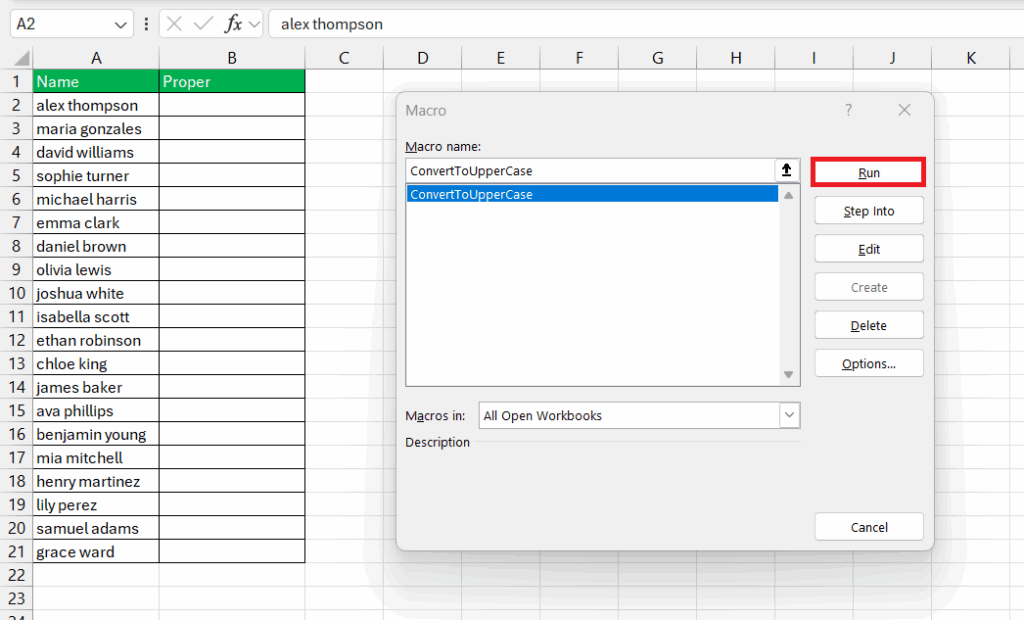
For truly customized case-changing operations, Visual Basic for Applications (VBA) scripting offers unparalleled flexibility. VBA macros allow you to create custom functions and procedures tailored to your specific needs. This option is suitable for complex and repetitive case conversion tasks which cannot be effectively managed using built-in tools or formulas. This approach provides the most advanced and tailored solutions to how to change the case in excel.
Collaboration and Change Tracking in Excel
Effective collaboration is crucial for many Excel projects. Knowing how to make an excel sheet editable by multiple users ensures smooth workflow and minimizes conflicts. Excel offers various tools to facilitate this, including co-authoring features and change tracking capabilities. Co-authoring allows multiple users to simultaneously edit a spreadsheet, while change tracking highlights and documents edits made by individual users. Understanding these methods is essential for successful collaborative work and resolving any issues related to version control. This section delves into these features, offering practical advice and solutions to common challenges associated with collaborative work in Excel.
Modern versions of Excel seamlessly integrate co-authoring capabilities, allowing how can multiple people edit excel at the same time. To enable co-authoring, save your Excel workbook to a cloud storage location such as OneDrive or SharePoint. Once saved to the cloud, multiple users can open and edit the same workbook simultaneously, providing a real-time collaborative experience. This feature substantially streamlines team projects and eliminates the need for cumbersome version control.
Using Excel's Track Changes Feature
Excel does not have a built-in Track Changes feature in the same manner as Word. However, the functionality of how do i track changes in excel can be simulated using various techniques. One common method involves using the version history feature available through cloud storage services. Alternatively, using add-ins specifically designed for change tracking in Excel can offer a more comprehensive solution. This provides a detailed record of edits and allows for a review process before finalising the document.
Resolving Conflicts in Collaborative Workbooks
When multiple users edit an Excel workbook simultaneously, conflicts may arise. Cloud-based co-authoring typically manages these conflicts automatically, highlighting areas of disagreement for manual resolution. Understanding how to navigate and manage these conflicts efficiently ensures data integrity. Efficiently resolving these conflicts helps to maintain the quality and accuracy of the data within the Excel workbook.
Managing Permissions and Access Control
Controlling who can edit a shared workbook is crucial for data security. Excel’s collaboration features allow granular control over user permissions, offering options to restrict edits to specific users. This ensures that only authorised individuals can modify the shared workbook and maintains the integrity of the data. Careful management of permissions is crucial for protecting sensitive information within the shared Excel file.
Advanced Excel Techniques and Troubleshooting
Beyond basic case conversion and collaboration, Excel provides a wealth of advanced features. This section explores some of these advanced functionalities, focusing on troubleshooting common issues and offering practical solutions. Whether you need to change the appearance of your spreadsheet, work with currency conversions, or navigate complex data sets, understanding these techniques significantly enhances your overall Excel proficiency. The goal here is to offer solutions for various common challenges users might face.
Editing Protected Views and Enabling Editing
Excels Protected View mode is a security feature that restricts editing to prevent the execution of malicious code. Knowing how to edit protected view excel is important for accessing and modifying workbooks received from untrusted sources. After carefully reviewing the workbooks contents, you can safely enable editing by clicking the Enable Editing button. If you're encountering issues with editing, checking whether the file is set to read only is a crucial first step. If it is, learn how do i change an excel document from read only. For multiple users, how to allow multiple users to edit excel is a key aspect of successful collaboration.
Customizing Excel's Appearance and Settings
Excel offers extensive customization options to personalize your workspace and improve efficiency. From changing the background (how to change background on excel) and theme (how to change excel dark mode) to adjusting currency settings (how to change currency in excel sheet) and region (how to change region in excel), customizing your Excel environment significantly enhances productivity and user experience. These tweaks significantly affect the user's comfort and efficiency while working with the software.
Troubleshooting Common Excel Errors
Excel occasionally throws errors, often indicating inconsistencies or problems within the data. Understanding the various error messages and knowing how to fix excel errors is vital for maintaining data integrity. Knowing how to change #value to blank in excel or how to change 1/0/1900 to blank in excel, for example, are common troubleshooting tasks. These error messages often point to specific data issues, helping you identify and rectify data inconsistencies.
Using Keyboard Shortcuts for Enhanced Efficiency
Mastering keyboard shortcuts accelerates workflow and minimizes mouse reliance. For instance, how to switch between excel tabs with keyboard is a helpful skill for users managing multiple worksheets. Efficient navigation and editing through keyboard shortcuts significantly improves workflow, allowing for a smoother, faster user experience. Learning these skills enables more efficient interaction with the software.
This guide provides a comprehensive overview of case changing, collaboration, and advanced techniques in Microsoft Excel. By mastering these skills, users can significantly enhance their productivity and efficiency while working with spreadsheets. Remember to always save your work frequently and leverage cloud storage for seamless collaboration and version control.
This video might interest you: give it a watch
Mastering Checkboxes in Microsoft Excel: A Comprehensive Guide

Mastering the Art of Adding Signatures in Microsoft Excel: A Comprehensive Guide

Mastering Excel Links: A Comprehensive Guide to Linking and Managing Data

Mastering Page Breaks and Layout in Microsoft Excel: A Comprehensive Guide

Mastering Bullet Points in Microsoft Excel: A Comprehensive Guide

Mastering Date Sorting and Management in Microsoft Excel
Leave a Reply
Contenido relacionado