

Mastering Excel Dates: A Comprehensive Guide to Adding and Manipulating Dates
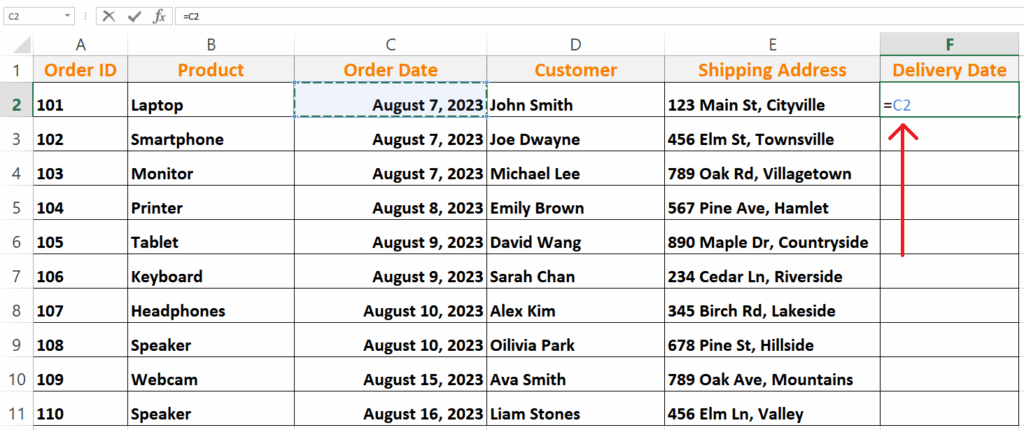
Microsoft Excel is a powerful tool for data management, and the ability to effectively handle dates is crucial for many tasks. From simple date entry to complex calculations involving date ranges and intervals, understanding how to work with dates in Excel is essential for both novice and experienced users. This comprehensive guide will explore various methods for adding dates in Excel, covering manual entry, automatic updates, and formula-based calculations. Well delve into adding days, weeks, months, and years to existing dates, addressing common queries and providing practical examples to help you become proficient in managing dates within your spreadsheets. Whether you need to add a date to a single cell, create a series of dates, or perform more advanced date arithmetic, this guide provides the knowledge and tools to succeed. Lets explore the different ways to effectively add dates to your Excel spreadsheets.
Table
Adding Dates Manually and Automatically in Excel
The most basic method for how to add date to excel is through manual entry. Simply select the cell where you want to input the date, and type it in using a format recognised by Excel (e.g., mm/dd/yyyy, dd/mm/yyyy, or yyyy-mm-dd). Excel will automatically recognise this as a date and adjust its formatting accordingly. However, manual entry can be tedious when dealing with many dates. Fortunately, Excel offers a more efficient approach to how to add dates in excel automatically. For instance, you can how to add current date in excel by using the TODAY() function. This function inserts the current system date into a cell and will update automatically each time the spreadsheet is opened or recalculated. This eliminates manual entry for frequently updated data.
Using the TODAY() Function for Automatic Date Updates
The TODAY() function is a simple yet powerful tool. To how to add the current date in excel, simply type =TODAY() into a cell and press Enter. This will instantly populate the cell with todays date. The beauty of this approach is that every time you open the Excel file, the date will reflect the current date. This function is invaluable for tracking progress on projects, maintaining logs, or creating timestamped records. It perfectly answers the question: how to add todays date to excel.
Manual Date Entry and Formatting Options
While the TODAY() function is convenient for how to add the date in excel automatically, manual entry remains a necessity in many situations. When manually entering dates, Excel provides flexibility in formatting. You can choose from various date styles, including month-day-year, day-month-year, and year-month-day formats. This formatting feature enables consistent and readable data presentation, especially critical when sharing Excel files with others. Learning about these formatting options is key to understanding how to add date to excel efficiently and accurately.
Custom Number Formats for Enhanced Date Display
Beyond the pre-defined date formats, you can also create how to add date format in excel. Accessing Excels custom number formatting allows for precise control over how dates are displayed. This feature is especially helpful for creating unique date representations specific to your projects needs. The ability to tailor the display is crucial when dealing with diverse date reporting requirements, adding a level of sophistication to your spreadsheet management, answering the question of how to add date in excel column effectively.
Using the NOW() Function for Date and Time Stamps
For situations requiring both date and time, the NOW() function is ideal, providing an answer to how do i add date and time in excel. This function automatically inserts the current date and time, updating dynamically whenever the worksheet is recalculated. It's essential for precise time-sensitive record-keeping, offering superior accuracy compared to manual input of date and time. This function helps solve how to add date and time in excel.
Adding Days, Weeks, Months, and Years to Dates Using Formulas
Excels true power lies in its formula capabilities. This section will detail how to add days to a date in excel and other time intervals. The core function for these calculations is the DATEADD function in other spreadsheet software; however, in Excel, its achieved by using simple addition and subtraction directly with dates. This means you can add or subtract any number of days, weeks, months, or years to an existing date by simply performing addition or subtraction. For example, to add 7 days to a date in cell A1, you can use the formula =A1+7. Similarly, you can use =A1+7 for how to add 7 days to a date in excel and adapt the number to add any duration.
Adding Days to a Date: Simple Arithmetic
Adding days is straightforward. Suppose you have a start date in cell A1. To find the date seven days later, the formula =A1+7 provides a quick and easy solution for how to add 7 days to a date in excel. Similarly, for how to add 1 day in excel, you would use =A1+1, and for how to add 10 days to a date in excel, you'd use =A1+10. This simple approach makes date arithmetic incredibly accessible, even for users unfamiliar with complex functions.
Adding Weeks and Months: Considering the Calendar
Adding weeks is also easily done with simple multiplication. Since a week has seven days, you can calculate dates one, two or more weeks ahead. For example, to add 2 weeks to a date in A1, you'd use =A1+(2*7) or simply =A1+14. For months, Excel handles the variations in month lengths automatically. Using =A1+1 will add one month to the date in cell A1, =A1+2 will add two, and so on, answering how to add 1 month to a date in excel and similar queries with ease. This functionality gracefully handles the nuances of the calendar.
Adding Years: Long-Term Date Projections
Adding years requires a bit more consideration. Adding years to a date in Excel is also achieved through addition. For how to add 1 year to a date in excel, use =A1+365. However, this does not account for leap years. To address this potential inaccuracy and for a more precise solution for how to add years to a date in excel, consider using the EDATE function.
Using the EDATE Function for Accurate Month Additions
The EDATE function is a more robust way to add months to a date, handling leap years and variations in month lengths automatically. The formula =EDATE(A1,1) adds one month to the date in A1, while =EDATE(A1,3) adds three months, addressing how to add 3 months to a date in excel. This function is particularly useful for accurate long-term projections and financial calculations where date precision is paramount. This function is a precise method for how to add months to a date in excel.
Advanced Date Manipulation Techniques in Excel
This section focuses on more complex date manipulation techniques within Excel, enhancing your ability to efficiently manage and analyze date-related data. Here we will explore creating date series, utilizing date ranges, and incorporating additional complexities for a complete understanding of how to add dates to excel.
Generating Date Series: AutoFill and Formulae
Creating a sequence of dates is crucial for many applications. Excel's AutoFill feature provides a quick way to generate a series of consecutive dates. Simply enter the first date, select the cell, and drag the small square at the bottom-right corner down to fill the desired number of cells. Alternatively, you can use formulas like =A1+1, dragging down to create a sequence. Understanding how to add consecutive dates in excel is invaluable for various analytical tasks. The auto-fill feature offers a practical method for how to add a column of dates in excel, simplifying data entry and promoting efficient workflow.
Working with Date Ranges: Defining Start and End Points
Defining and working with date ranges efficiently is vital for several data analysis techniques. To set a date range, simply input the start and end dates in separate cells and subsequently apply formulas for processing the range. Understanding how to add a date range in excel is fundamental to tasks such as filtering data, generating reports, or analyzing trends. For instance, understanding how to use this feature will enhance your ability to filter or sort data based on specific date ranges. Learning about the powerful applications of how to add a date range in excel will greatly enhance your spreadsheet workflow.
Adding Date Pickers and Drop-downs: Enhancing User Interaction
Excels functionality extends beyond basic date entry. You can enhance your spreadsheets user experience by incorporating date pickers and dropdowns. Although not directly built-in, there are several methods (using VBA or add-ins) that you can explore to improve user interaction for how to add a date picker in excel. These enhancements ensure that your data entry is smoother and more reliable. Exploring techniques like how to add a date dropdown in excel will significantly enhance your spreadsheet management capabilities.
Advanced Date Functions: EDATE, DAY, MONTH, YEAR
Excel offers a suite of functions beyond simple addition. The EDATE function, as discussed before, provides precise month additions. Functions such as DAY, MONTH, and YEAR extract individual date components, allowing for more granular data manipulation. Knowing how to add months to date in excel or to extract specific date parts (days, months, years) through dedicated functions like DAY, MONTH, and YEAR is critical for advanced applications and data analytics.
Mastering the art of adding and manipulating dates in Excel significantly enhances your spreadsheet capabilities. From simple manual entry and automated updates to complex formula-based calculations and advanced functions, this comprehensive guide has covered a wide range of techniques for efficiently handling dates within your spreadsheets. By applying the methods outlined here, you can streamline your workflow and unlock the full potential of Excel's date handling capabilities, allowing you to work more efficiently and accurately with time-sensitive data. Remember to explore the additional functions and techniques provided by Excel to further enhance your skills and productivity.
This video might interest you: give it a watch
Mastering Excel Links: A Comprehensive Guide to Linking and Managing Data

Mastering Page Breaks and Layout in Microsoft Excel: A Comprehensive Guide

Mastering Bullet Points in Microsoft Excel: A Comprehensive Guide

Mastering Date Sorting and Management in Microsoft Excel

Mastering Excel Filtering: A Comprehensive Guide to Data Management

Mastering Hyperlinks in Excel: A Comprehensive Guide
Leave a Reply
Contenido relacionado